Core Puzzle Loop
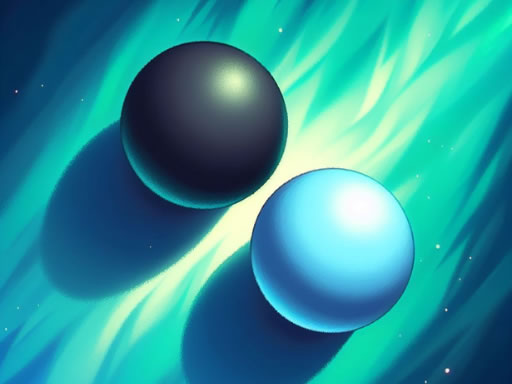
Each round begins with a dark orb and a light orb placed on a grid of round cells. The player’s task is to move the dark orb so that it contacts the light orb, nudging it toward a specifically marked cell. The grid layout changes with every level, forcing players to adapt their approach. Success depends on understanding how each move affects both orbs simultaneously.
Grid Layout & Movement
The playing field consists of interconnected circular cells arranged in a pattern that varies per level. Players click and drag the dark orb from its starting position into an adjacent cell. The light orb responds only when the dark orb pushes against it. This simple interaction creates a wide range of spatial puzzles, from straightforward paths to multi-step sequences that require backtracking.
Difficulty Curve
Early levels introduce the basic mechanic with short, direct solutions. As players progress, the grid becomes more complex, with obstacles or longer distances between orbs. The difficulty increases gradually, allowing newcomers to build confidence while still offering satisfying challenges for experienced puzzle solvers. No timers or pressure exist, so players can think at their own pace.
Visual Style & Accessibility
The interface uses a clean, minimal design with muted colors and clear contrast between the dark orb, light orb, and highlighted target cell. No distracting animations or cluttered menus interfere with focus. The game works well on both desktop and mobile browsers, making it suitable for quick sessions during a commute or longer play at home.
Strategic Thinking
Successful players learn to visualize the path of the light orb before making a move. Because the dark orb can only push the light orb in the direction it is moving, planning several steps ahead becomes essential. Some levels require moving the dark orb around the grid to approach the light orb from a specific angle. This emphasis on foresight makes the game a gentle exercise in logical reasoning.





💬 Comments
0 comments